How does an individual’s movement over time affect their health?
As the COVID-19 pandemic made clear, diseases do not stop at geographic boundaries. Similarly, neither do people. On average, families relocate multiple times over the course of their lives, yet most public health research focuses on environmental conditions at a single place and time rather than accounting for people’s movement over time.
New research from College of Health professor Eric Delmelle is bringing a geographic lens to issues of cluster detection, or identifying unusual concentrations of a disease in a specific place or time. Delmelle is developing a new tool to improve the accuracy of disease surveillance and cluster detection, which takes residential mobility over time into account. This project, entitled “Residential Mobility: Implications for the Accuracy of Disease Cluster Detection,” was initially funded by an award from the National Science Foundation (NSF) in 2022 while Delmelle was a researcher at the University of North Carolina at Charlotte. Since coming to the College of Health, he has received a subaward from his former institution to continue this work.
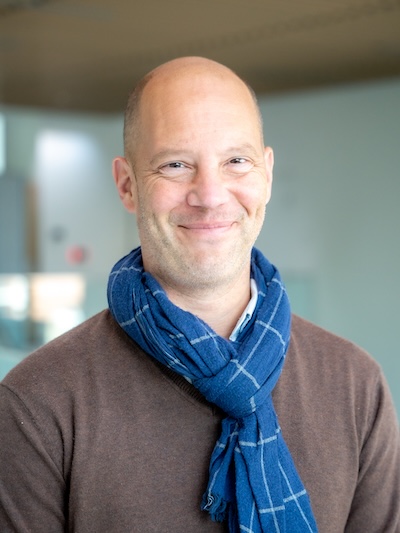
A geographer by training, Delmelle is an associate professor and the associate chair in the department of biostatistics and health data science. His research focuses on spatial epidemiology, geospatial health data science and the modeling of health disparities. Developing innovative tools and data-driven approaches to improve public health is a defining feature of the College of Health’s commitment to research.
“We move sometimes later on in our life, and we are detected with cancer,” he said. “Something in the environment right here at the moment of detection must be the reason for it, after accounting for all of things like age and risk factor. But never does the doctor ask us, where did you live before? Did you used to live in an area where there were a lot of chemical plants?”
Mobility also affects how infectious diseases spread and how accurately clusters can be detected.
“People move, so what does that mean in terms of spreading an infectious disease?” he continued. “How does that affect our ability to detect clusters correctly or not, so we don’t have a false alarm and then all of a sudden we have to quarantine all of these individuals. In fact, they may be infected, but the true source of the infection may come from somewhere else. That’s where we’re trying to recreate their history, to try to better understand the spreading mechanism of disease.”
One dataset comes from Western Michigan, comprising 80,000-100,000 cases of sexually transmitted diseases, including gonorrhea and chlamydia. He is careful to preserve privacy. “We don’t have the names of these individuals; however, we do have their addresses at the time they were diagnosed," he said.
His team will work to identify where the patient may have lived before and after their diagnosis, without their name, using commercial databases — a challenging and sensitive task, especially as these diseases are quite stigmatized. Delmelle also plans to involve undergraduate students at Lehigh University in the project. Students will receive training in health data science, electronic health records and data analysis.
Delmelle will also analyze a second dataset from Florida of children born with birth defects, including Down syndrome, congenital heart defects and spina bifida. According to Delmelle, approximately 6,000-7,000 children are born with these birth defects every year. He is particularly interested in following the movement of these families. “Do the parents tend to move afterwards to be closer to the hospital where the children are going to receive recurring care? That’s possible. We wouldn’t be allowed to ask the parents, but we’re trying to see what their movement looks like,” he explained.
Delmelle said that sometimes public health interventions can be based on biased or unverified data, noting interventions during COVID-10 pandemic as an example, so introducing mobility into surveillance can improve accuracy. From the science perspective, his research will also explore the notion of precision versus privacy. “Do I protect patients by aggregating them to the county level? Then I lose the precision, which can lead to false positive,” he shared. “How much am I willing to give, and how much am I willing to lose in terms of accuracy?”
Another broader impact is “on the big data versus underlying assumptions,” he said. “We get more and more and more data, and how can we incorporate it to make decisions that guide public health practitioners to make better decisions, or at least guide them about the assumptions that the data has?”
“We believe maps that we see are precise, but sometimes they are not,” Delmelle said. “The data that they’re using is not precise, so the assumption we make may not be true. The concept is that better detection tools could lead to better public health decisions.”
Research like Delmelle’s in the College of Health’s department of biostatistics and health data science combines public health knowledge with data and technology to positively impact the health of our communities. Learn more by clicking here.


