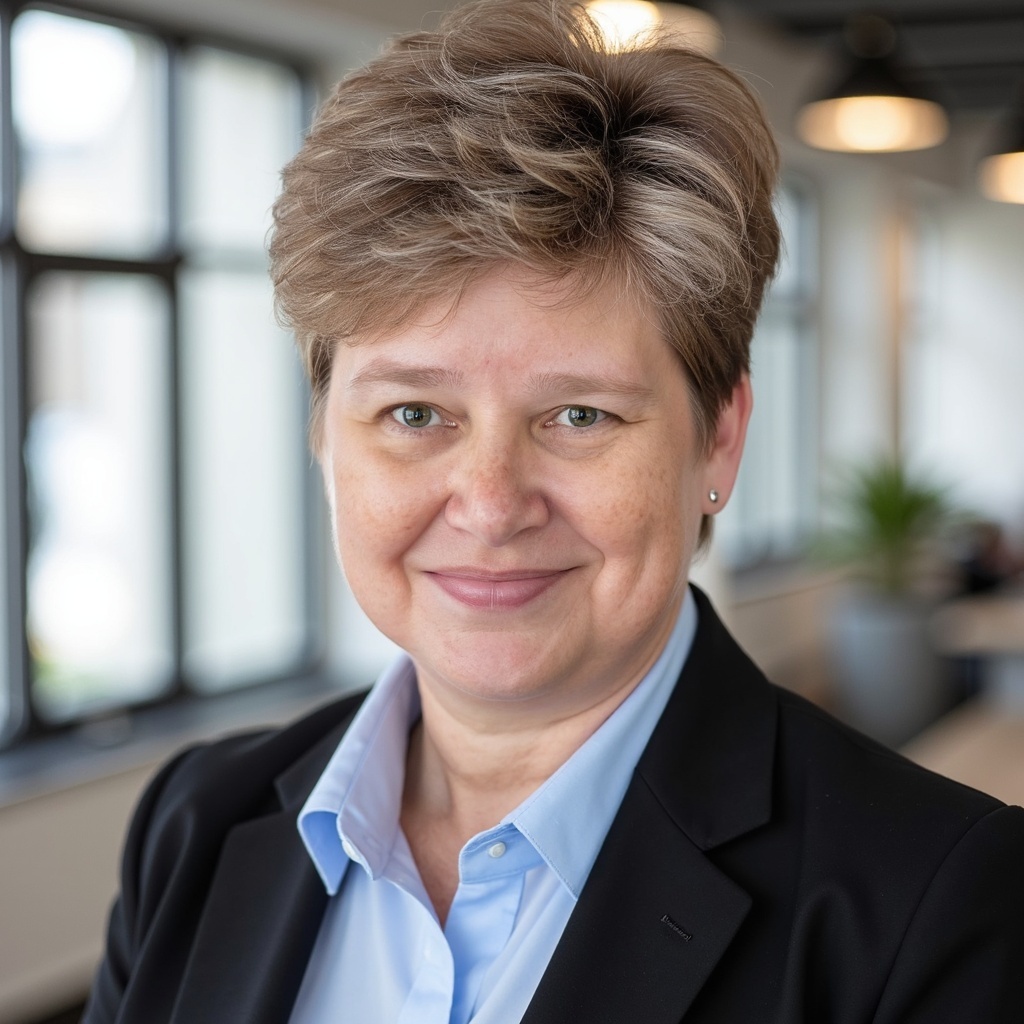
Lisa Lindley is on a mission to combat misinformation, improve health literacy and empower young adults to make informed health decisions.
Lindley, an associate professor in the College of Health’s (COH) department of community and global health and director of the MPH program, has devoted her career to health promotion and education. She began her career in the early 1990s, at the height of the AIDS epidemic, working in HIV/AIDS education, and later served as the HIV coordinator for the South Carolina Department of Education. Over the years, her research interests expanded to include adolescent and sexual health, LGBTQ+ health, and the prevention of HIV, sexually transmitted infections and unintended pregnancies.
At Lehigh, Lindley, along with COH professors Tracy Nichols, Joanna Mishtal and Fathima Wakeel, cofounded the Sexual and Reproductive Health Power Lab, which aims to debunk myths, stop misinformation and empower people to take charge of their sexual and reproductive health. According to Lindley, understanding health information can be challenging enough, but the growing prevalence of misinformation and disinformation, particularly on social media, makes it harder for people to make informed health decisions.
“One of the areas we’re really interested in with the Power Lab is examining misinformation around sexual health issues,” she explained. “We started by examining hormonal contraception because social media contains a substantial amount of misleading and conflicting information about its safety, side effects and impact on fertility.”
The Power Lab conducted a mixed-methods study examining how young adult women, ages 18-25, in different political contexts understand and navigate information about hormonal contraception. Two papers stemming from this study are currently under review. Lindley shared that another paper by the Power Lab was just published in the Journal of American College Health looking at “Pregnancy Prevention Method Use Among US College Women Before and After Dobbs.”
Lindley’s research interests overlap with those of Nichols, Mishtal and Wakeel in sexual and reproductive health. Amid recent funding cuts, they decided to collaborate to maximize their efforts. “It’s been wonderful. It’s exactly what I’ve been looking for as far as being part of a research team,” she said.
The Power Lab offers many research opportunities for students, helping them build their research skills and interests and broaden their understanding of these issues. Participating students include undergraduates Nina Berkowitz ‘26, Laxmi Thakkar ’26 and Nikitha Ram ’26, as well as second-year doctoral students Sajib Rana, Sandra Boakye and Rejoice Obiora, and Ph.D. candidate Laura Porto. Lindley is also mentoring Rana on an independent study examining how stigma among healthcare providers affects the care they provide, particularly for the transgender community.
Lindley and Mohammed Jibriel, an assistant professor in the department of community and global health, have received a faculty research grant through Lehigh University’s Office of the Vice Provost for Research to support a separate study titled Understanding Misinformation About Gender-Affirming Care Across State Policy Contexts. This study will assess knowledge, misinformation endorsement and attitudes toward gender-affirming care among the general public and among parents of school-aged youth in Florida, California and Pennsylvania.
They also plan to interview trans adults and parents of trans school-aged youth to “understand how misinformation and the political climate are affecting their lives, their families and their health,” she said. “With the midterm elections coming up, these issues are moving back into the spotlight, so the timing feels especially important.”
As a researcher focused on adolescent sexual health, Lindley also finds creative ways to engage students on campus beyond the traditional research setting. In February, she brought ONE Condom’s Project Condom to Lehigh, which she described as a riff on Project Runway.
“If you come into the Health, Science and Technology Building and stop by the College of Health’s main office, you’ll see two Project Condom dresses on display,” Lindley said. “It’s a really fun project. Students, faculty and staff form teams and make garments out of condoms. We usually have a different theme each year. It’s a creative way to get people talking about sexual health — whether that’s condom use, safer sex or sexual abstinence.”
Project Condom won the “Excellence in Entertainment Award” at Lehigh’s Student Life Leadership Awards this past May. According to Lindley, the event was a collaboration among the Office of Health Advancement and Prevention Strategies, Survivor Support and Intimacy Education, the Gender, Leadership and Empowerment Center, the Pride Center and the COH. The event is planned to be hosted again in 2027.
For Lindley, these efforts underscore the same goal that has guided her career: helping young people understand their health, recognize misinformation and access health services they need. “It’s about more than just knowing the information,” she said. “It’s about knowing how to use it to make informed decisions and take care of yourself.”
To learn more about the Power Lab, please click here.


