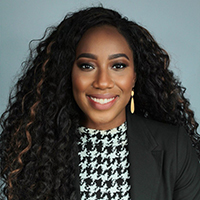
Aika Aluc, a fourth-year doctoral candidate at Lehigh University’s College of Health, has been selected as a member of the 2026-28 ZERO TO THREE Fellowship class. This intensive 18-month leadership development program brings together a multidisciplinary cohort of leaders working to transform programs, systems and policies so that infants, toddlers and families have a strong start in life.
A passionate researcher and advocate for maternal and child health, Aluc was one of 20 early- to mid-career fellows chosen from more than 300 applicants across 47 states and 13 countries. The fellows’ combined expertise includes infant and early childhood mental health clinical services, program administration, research and early childhood policy.
Aluc is excited to learn alongside professionals who approach this work from a variety of disciplines and perspectives.
“I was looking for an opportunity that would stretch me beyond the areas where I already have depth,” she said. “I bring experience in maternal health, policy, governance, research and community engagement, but I wanted to deepen my understanding of the early childhood ecosystem and learn alongside people who are working in different areas from my own.”
As a fellow, Aluc will be advancing a “vision for change” focused on strengthening alignment between maternal health and early childhood systems.
“What happens when we stop treating maternal health and early childhood as separate systems? Families don’t experience their lives in silos, even though our policies, funding streams and services often operate that way. The well-being of mothers, babies and families is interconnected, and our system should reflect that,” she explained.
The fellowship includes a written curriculum, six in-person gatherings, four retreats and individual coaching from the program director. Topics to be covered include leadership development; advocacy and public policy work; infant and early childhood mental health, and more. Towards the end of the program, fellows will offer cumulative presentations to showcase their learning and how they intend to advance their work in the future.
Under the mentorship of Fathima Wakeel, associate professor, department of population health, Aluc plans to graduate with her Ph.D. this spring. She has appreciated the opportunity to research population health at the COH and “look beyond individual outcomes and ask what systems and environments are producing them.”
“I appreciate the space to continue to be interdisciplinary and expand my thought and the questions that I’m asking, and the university supports that line of thinking,” she continued.
Wakeel said that she is incredibly proud of Aluc for being selected for this highly prestigious and competitive fellowship.
“She is an exceptional scholar and emerging leader whose research is addressing some of the most important challenges facing mothers, young children and families,” said Wakeel. “What makes her work particularly impactful is the linking of mothers’ lived experiences with the broader policies and systems that shape maternal and child health. Her research is helping us think differently about how we support families, recognizing that improving outcomes for young children requires strengthening the systems that support their mothers and caregivers. I cannot think of anyone more deserving of this recognition, and I am excited to see the impact she will continue to make.”
After graduation, Aluc plans to continue working at the intersection of research, policy, strategy and systems change.
“I’m particularly interested in roles and looking at opportunities where I can bring different sectors together around complex issues affecting women, children and families that really translate the data, evidence and people’s lived experiences into institutional and policy change,” she said. “I think the fellowship will sharpen where I can make the best and greatest contribution.”
As she approaches the final phase of her Ph.D., she sees the fellowship as an opportunity to intentionally expand her work to improve conditions for mothers and families.
“Imagine a world where we designed around the family’s experience instead of around the institutional boundaries,” she said.
For more information about graduate programs at the College of Health, please click here.


